In a saturated digital world where brands compete every day to capture attention, the newsletter stands out as an essential lever of email marketing. The numbers speak for themselves: an open rate that can reach up to 45% and a click-through rate of 12% reflect the power of this channel when you know how to optimize it. Yet it’s clear that many entrepreneurs still see the newsletter as a chore, a task to put off out of fear of delivering content that won’t be read or, worse, rejected.
The reality is quite different. A well-designed newsletter, segmented and personalized, with an attractive responsive design and engaging content, can turn into a genuine conversion machine capable of driving purchases and strengthening loyalty. The newsletter offers total control, escaping the whims of social media algorithms, and proves to be one of the tools with the best return on investment for small businesses.
This complete guide reviews the fundamentals and advanced techniques for creating a high-performing newsletter: from choosing the right tools to writing compelling content, including setting up effective calls to action and analyzing performance. Through concrete examples, practical tips, and proven strategies, you’ll discover how to turn every send into a tangible opportunity to grow your business and maintain an authentic dialogue with your audience.
Defining the ideal newsletter to maximize open rate and conversion
Creating a newsletter that converts effectively first requires a clear understanding of what a newsletter is and its true purpose. A newsletter is not just a simple promotional email; it’s a recurring means of communication that builds a reliable, personal relationship with your subscribers.
There are mainly two types of newsletters:
- The marketing newsletter: its goal is to promote products, events, or offers. Its content is focused on direct conversion by incorporating specific calls to action.
- The editorial newsletter: more content-oriented, it aims to inform, entertain, or inspire with stories, analyses, or advice, often by creating an immersive experience that builds long-term loyalty.
The main distinction lies in tone and objective. To maximize the open rate, an engaging newsletter must anticipate the reader’s expectations by offering suitable content right from the subject line, a crucial element for enticing recipients to click. The key elements that promote a good open rate include:
- A clear and intriguing subject line: neither too short nor too long, with wording that sparks curiosity without falling into the trap of “incredible offer” clichés that can be irritating.
- A recognizable sender address: trust begins with immediate identification of the sender.
- List segmentation: tailoring the message to specific groups of subscribers increases engagement.
- Content aligned with expectations: promising and delivering consistent added value.
With a conversion-focused approach, the content must be structured, with a powerful call to action that is clearly visible without being intrusive. Formatting, a responsive design suited to all devices, and the smoothness of the message also help to hold attention and encourage interaction.
| Type of newsletter | Main objective | Example of content | Impact on open rate |
|---|---|---|---|
| Marketing | Promotion and conversion | Special offers, launches, events | Often high if targeted and relevant |
| Editorial | Engagement and loyalty | Articles, stories, advice | Variable but builds loyalty over the long term |
Knowing your audience for engaging, personalized content
Everything starts with a deep understanding of your target. Segmentation goes hand in hand with personalization and relevance, two inseparable levers for improving the click-through rate and conversion. Common segmentation criteria include:
- Demographics (age, gender, location)
- Purchasing behavior
- Previous interactions with your emails
- Customer status (prospect, loyal customer, inactive customer)
By refining your list based on this data, you create a tailored dialogue that significantly increases loyalty and the likelihood of purchases. This logic applies to every message, thereby reinforcing the perception of a privileged relationship with your brand, synonymous with trust and continued interest.
Choosing the best tools for creating and sending newsletters effectively
A newsletter’s performance also depends on the quality of the tools used. In 2025, the range of solutions available on the market has expanded considerably, offering options that combine ease of use, advanced automation, and in-depth analytics.
Here are four of the most reputable newsletter platforms:
- GetResponse: a solid tool with an intuitive interface, it offers a drag-and-drop editor, advanced segmentation, A/B testing, and even artificial intelligence to generate content in record time.
- Mailchimp: favored by beginners, it provides customizable templates with free basic features, and advanced options suited to more sophisticated marketing campaigns.
- Brevo (formerly Sendinblue): a modular solution integrating emailing, SMS, CRM, and automation. Ideal for small businesses looking for an integrated set of relationship tools.
- Substack: favored by editorial creators, this tool simplifies publishing content in newsletter form with a minimalist interface and monetization options to support creation.
Of course, there is a myriad of other lesser-known solutions, as well as plugins dedicated to CMS platforms such as WordPress, which make it easier to manage lists and personalize newsletters directly from your site.
| Platform | Main features | Free tier | Key advantages | Drawbacks |
|---|---|---|---|---|
| GetResponse | Advanced segmentation, AI, automation, A/B testing | Up to 500 subscribers, 2,500 emails/month | Intuitive interface, premium features | Premium cost for large lists |
| Mailchimp | Free templates, basic analytics | Up to 500 contacts | Easy to use for beginners | Advanced features reserved for paid plans |
| Brevo | Multi-channel, integrated CRM, automation | 300 emails/day | Modular and scalable solution | Interface sometimes complex for novices |
| Substack | Editorial publishing, simple monetization | Free, commission on paid subscriptions | Ideal for content creators | No advanced segmentation or automation |
Creating engaging content: the key to driving conversion through email marketing
Content is the heart of any newsletter. It’s what captivates, builds loyalty, and above all drives action. Engaging content relies on clear, concise writing tailored to your audience.
Essential elements for content that works
- The email subject line: this first contact must be carefully crafted to increase the open rate. Aim for a length between 40 and 50 characters, an authentic tone, and avoid the pitfalls of overly commercial words.
- The introduction: quickly set the context and spark interest.
- The body of the message: one or two well-developed ideas, with clear information hierarchy through headings, lists, and well-spaced paragraphs.
- A visible call to action (CTA): a button or link that clearly prompts action: discover, buy, sign up, etc.
- A personalized signature: to humanize the message and strengthen the sense of closeness.
Using natural, conversational language makes reading easier on all devices, especially mobile, which is now the majority. Consider incorporating optimized, high-quality images to create a pleasant visual environment without weighing down the newsletter.
A suitable responsive design ensures comfortable reading on smartphones, tablets, and computers. This technical adaptation has become essential to eliminate any frustration and encourage clicks.
| Element | Role | Tip for conversion |
|---|---|---|
| Subject line | Encourages opening | Controlled curiosity + clarity |
| Introduction | Sets the context | Quick hook |
| Body of the message | Delivers the key information | Hierarchy and clarity |
| Call to action | Prompts action | Visibility and relevance |
| Signature | Personalization | Humanizing the message |
Adopting a coherent narrative around your brand’s values or mission helps create an immersive experience, thereby strengthening engagement and interactions.
Using artificial intelligence to speed up creation
The latest innovations in artificial intelligence are transforming the way newsletters are designed. Integrating assistants such as GetResponse’s reduces creation time to a few minutes while maintaining professional quality.
By submitting basic information — industry, objectives, desired tone — the AI automatically generates:
- A complete proposal of text content
- An appropriate layout
- A selection of harmonious colors and typography
- Suggestions for the email subject line
This doesn’t fully replace human work, especially for advanced personalization, but it offers valuable time savings while ensuring an optimal foundation. Marketers can then focus on analyzing performance and strategic fine-tuning.
Optimizing segmentation and targeting to increase click-through rates and loyalty
Precise segmentation is the main engine of an effective email marketing strategy. It consists of grouping your subscribers into homogeneous segments in order to send them relevant messages that address their specific interests and behaviors.
The benefits of careful segmentation translate into:
- A better open rate thanks to targeted communication
- An increase in click-through rate because the content is tailored to needs
- A drop in the unsubscribe rate through greater message relevance
- Stronger engagement via personalized campaigns
Concrete examples of criteria to consider for segmentation:
- Interest in a specific product or service
- Purchase or browsing history
- Geographic location
- Preferred opening and reading time
| Segmentation criterion | Advantage | Example of application |
|---|---|---|
| Purchasing behavior | Sending personalized offers | Promo on complementary accessories |
| Previous engagement | Targeting inactive customers | Reactivation campaigns |
| Stated preferences | Increased relevance | Dedicated themed newsletter |
| Time zone | Sending at the right time | Using Perfect Timing |
Implementing a responsive design for optimal reading on all devices
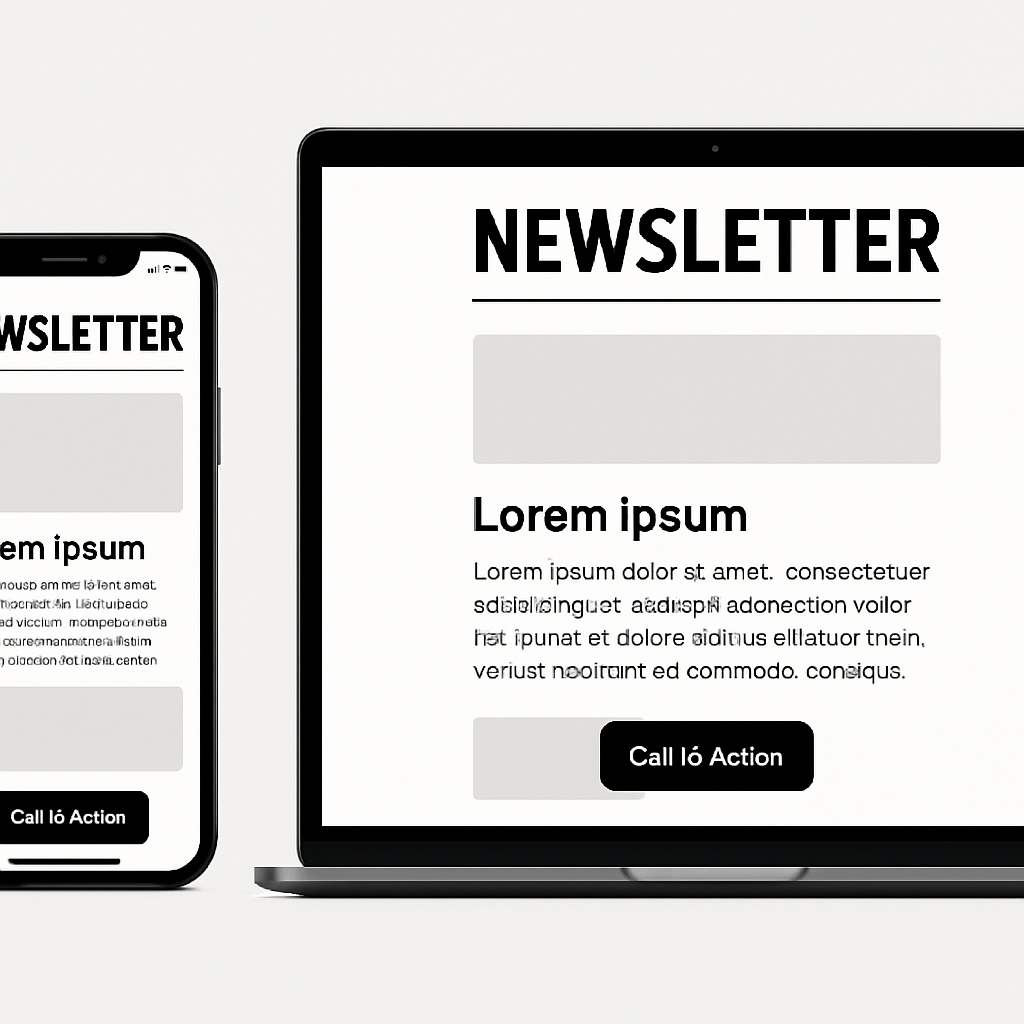
The growing diversity of reading devices requires an adapted design, known as responsive design, to ensure that your newsletter displays perfectly on smartphones, tablets, and computers.
A responsive design offers several essential advantages:
- Improved accessibility: ease of reading regardless of the device used.
- Increased engagement rate: a pleasant email encourages more interaction.
- Reduced unsubscribe rate: less frustration.
- Better brand image: demonstrates professionalism in communication.
Best practices for a responsive design include:
- Using an optimal width of 600 pixels for the email template.
- Standard fonts supported by most email clients (Verdana, Georgia, Arial).
- A modular layout with blocks that are easy to rearrange according to screen size.
- CTAs that are clearly visible and touch-friendly on mobile.
- Images optimized in weight and dimensions.
| Element | Best practice | Impact |
|---|---|---|
| Template width | 600 px | Comfortable reading on mobile |
| Fonts | Verdana, Georgia | Maximum compatibility |
| Modular layout | Adaptive blocks | Smoothness on small screens |
| CTA | Large buttons, contrast | Better click-through rate on mobile |
| Images | Optimized weight | Fast loading |
Performance analysis: decoding data to amplify conversion
The strategy of a high-performing newsletter doesn’t stop at sending. Performance analysis allows you to continuously refine your campaigns, identify strengths and opportunities for improvement.
The key performance indicators include:
- Open rate: measures the proportion of subscribers who opened the email, revealing the relevance of the subject line and the sender.
- Click-through rate: indicates how many interacted with the links, thereby assessing the quality and impact of the content.
- Conversion rate: demonstrates the ability to turn interest into concrete action (purchase, sign-up, download).
- Unsubscribe rate: monitoring of defections that may signal a problem with relevance or frequency.
- Bounce rate: undelivered emails, generally due to invalid addresses.
| Indicator | Meaning | Possible corrective action |
|---|---|---|
| Low open rate | Unappealing subject line or sender | Test different formulas, personalize |
| Low click-through rate | Content or CTA not convincing enough | Optimize content, place CTA strategically |
| High unsubscribe rate | Messages too frequent or not relevant enough | Review frequency, segment further |
| High bounce rate | Poor list quality | Clean the contact database |
Using A/B tests to compare different versions of a newsletter allows you to validate the best methods and adapt to changing expectations. The fine handling of data and the use of detailed reports become a real competitive advantage and an accelerator of performance over time.
Promoting and growing the newsletter: strategies to increase audience and engagement
A newsletter can only thrive with an active and engaged subscriber list. Building and expanding this audience takes time, patience, and a suitable strategy.
Effective techniques for promoting your newsletter
- Visible integration on your website: a sign-up form accessible on all pages, non-intrusive pop-ups, or engaging banners.
- Calls to action in your content: social media, videos, blogs, and podcasts, where you invite people to subscribe while detailing the benefits.
- Offering lead magnets: free, high-value content (e-book, webinar, checklist) in exchange for a sign-up.
- Encouraging shares: prompting subscribers to pass it on to their network, sometimes with rewards.
The quality of the content distributed plays a key role in retaining and attracting a qualified audience. It’s essential to create a lasting, tangible value proposition.
| Technique | Objective | Advantage |
|---|---|---|
| Lead magnets | Attracting qualified subscribers | More numerous and targeted sign-ups |
| Pop-ups | Immediate incentive | Fast conversion |
| Shares by subscribers | Organic expansion | Increased trust |
| Social media | Visibility | Enhanced brand awareness |
Monetizing the newsletter: turning engagement into revenue
Beyond being a simple communication tool, the newsletter stands out as a monetizable channel with many facets.
The main monetization models are:
- Paid subscriptions: offering premium content accessible only to paying subscribers on platforms like Substack or via a proprietary solution.
- Sponsorship: integrating advertising messages or content directly into the newsletter through paying partners.
- Affiliate programs: promoting third-party products or services and earning a commission on each sale generated.
- Promoting your own products or services: the newsletter is a direct channel for converting an already engaged audience into loyal customers.
The success of monetization depends above all on the quality of the relationship maintained with subscribers. Building this trust requires consistency, authenticity, and respect for the pace of messages.
| Monetization model | Advantages | Drawbacks | Example |
|---|---|---|---|
| Paid subscriptions | Stable recurring revenue | Requires an engaged audience | Premium newsletter on Substack |
| Sponsorship | Fast monetization | Possible loss of authenticity | Ads integrated into emails |
| Affiliation | Revenue proportional to conversions | Requires a targeted audience | Affiliate links in the newsletter |
| Direct sales | Total control over the customer relationship | Requires marketing effort | Promoting your own products/services |
Finally, taking tax regulations into account is crucial, particularly regarding VAT if the newsletter generates commercial revenue.
Frequently asked questions about creating, managing, and monetizing newsletters
Is it possible to create an effective newsletter with the help of artificial intelligence?
Yes. Solutions such as GetResponse’s AI tool make it possible to generate complete content in a few minutes, including the subject line, layout, and design, based on the information you provide. This makes creation easier and speeds up the process while maintaining a high level of quality.
What is the difference between Substack and platforms like GetResponse or Mailchimp?
Substack is primarily dedicated to editorial content creators and offers a simplified interface for publishing and monetizing newsletters. It does not offer advanced segmentation or automation tools like GetResponse or Mailchimp, which are designed for more sophisticated marketing campaigns.
How many subscribers do you need to start a newsletter?
There is no minimum threshold. You can start with a single person who has expressed interest in receiving your emails. What matters is the quality and engagement of your list, not the quantity.
How can I improve the open rate of my newsletters?
Carefully craft the email subject line, personalize the content as much as possible based on segmentation, test different sending times, and make sure to use a responsive design for optimal reading on all devices.
How do I handle subscriber unsubscribes?
It is essential to include a visible unsubscribe link in every newsletter, in accordance with regulations. Letting go of a subscriber who no longer wishes to receive emails helps maintain the health of your list and improves deliverability.
